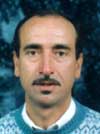
néjib Hosni and Dalila Meziane
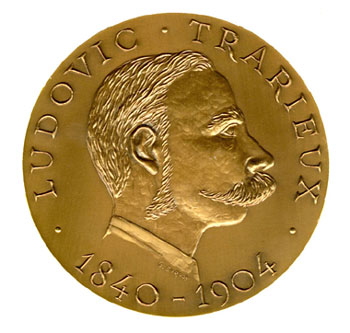
Ludovic Trarieux Prize 1996
|
|
|
The story of Hosni's career is a lesson in professional integrity and courage in the face of severe obstacles. Unlike some, who defended only those whose political views they shared, Hosni defended clients from across the political spectrum, from leftists and communists to alleged supporters of the banned Islamist political party An-Nahda. |
Hosni's work reached a level of prominence in 1992 when he was a key member of the defense team for 279 Islamist sympathizers tried for subversion before a military court. These trials were the climax of the government's political strategy to characterize An-Nahda as a violent, anti-democratic movement operating outside the law. International observers who attended the hearings described the proceedings as unfair, pointing to widespread violations of pre-trial detention procedures, reliance on statements extracted from defendants by use of torture and the fundamental anomaly of civilians being tried by military tribunals.
As a lawyer involved in political defense work, Hosni was often followed by Tunisia's ubiquitous secret policemen. His correspondence and telephone conversations were interfered with, and his clients and potential clients in commercial cases were urged to take their business elsewhere. Once he came home to find that the municipality had bulldozed part of the wall around his house in preparation for what they said was going to be a new road. The road has never been built. After the initial shock, this treatment did not really surprise him. Other lawyers with whom he worked closely had many stories to share about threats and harassment from the authorities.
In 1994 Hosni acted in the defense of the former president of the Tunisian League for Human Rights, Dr. Moncef Marzouki, who was detained for four months in March after standing as an opponent to President Ben Ali in national presidential elections.
Néjib Hosni, who has received numerous international prizes for his committed work in defence of human rights and is a founder member of the Conseil national des libertés en Tunisie (CNLT), National Council for Liberties in Tunisia, was imprisoned in June 1994 on a trumped-up charge of forgery.
Hosni was held for 14 months, the maximum period allowed under Tunisian law, without formal charges. After being sentenced, without evidence, to eight years in prison in an unfair trial in 1996, he was conditionally released
Hosni was also sentenced to an eight year sentence pronounced by the Criminal Court of Kef in western Tunisia in January 1996 after a trial that failed to meet minimum international standards. While in detention, Hosni was subjected to harsh treatment, and on at least one occasion in November 1995, torture. .
In September 1996, UAE and the Bordeaux Bar Human Rights Institute awarded Hosni the Ludovic Trarieux Human Rights Prize. The Tunisian government protested the bestowal of such an award on Hosni.
On December 17, 1996, Nejib Hosni was released from prison by a conditional pardonat the end of the same year after an international campaign of solidarity..
He was re-arrested in December 2000 and sentenced to 15 days in prison for "non- compliance" with a judicial decision which banned him from practising his profession as a lawyer for five years. This ban was arbitrary since it was in breach of current texts regulating the legal profession. They state that the Tunisian Bar Council is the only body authorized to decide whether a lawyer may be suspended or disbarred.
In January 2001, after having served his sentence, Néjib Hosni was kept in detention in accordance with a decision by the Minister of the Interior to repeal the order conditionally releasing him in December 1996. Néjib Hosni is now being forced to complete the remaining five and a half years of the eight-year sentence imposed in the 1996 trial.
He was released from El-Kef Prison on 12 May 2001 following a presidential pardon after nearly five months of imprisonment as a prisoner of conscience.
Nejib Hosni has paid a heavy price for his defense of human rights and the rule of law. Much remains to be done if his sacrifice is to bear fruit in the development of respect for human rights in Tunisia.
|
|
|
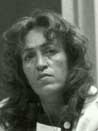
As for Dalila Meziane, badgered, abused, attacked, continued by anonymous and unpunished aggressors, she looked for safety going from bars ito bars from Tizi-Ouzou, yo Bouira and then to Algiers, because its standpoint attracted the antipathy to him as well FIS as FLN, she had no other recourse, after attending the murder of a number of its close relations and in particular his brother, than to require, in France a statute of refugee painfully and lengthily disputed to her.
|
Mrs Dalila MEZIANE was the second woman, after Mrs Jadranka CIGELJ, in 1994, to receive the Price. Her candidacy was presented by European Legal Network one Asylum (ELENA). Unfortunately she was not permitted to find in France the right to become again what she is : a lawyer.
T Both were victims of " lapse of memory or the contempt of the human rights" in North Africa in the end of the twentieth century, and after the strictly equal vote of the Jury , il was decided not to make any distinction between them.
