ZHOU Guoqiang
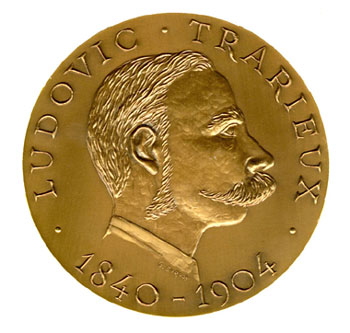
Ludovic-Trarieux Prize Winner 1998
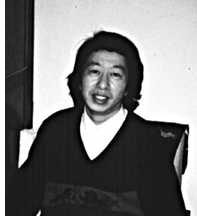
The lawyer, poet and labour activist and real " veteran " of China’s democracy movement, like WEI Jingsheng, ZHOU Guoqiang, born October 20th 1954, is the sixth lawyer in the world to receive the Prize.
Involved in the famous 1979 " Democracy Wall Movement ", he was a signatory of the 1993 " Peace Charter " and one of the creators of the " League for the Protection of the Rights of Working People ".
In 1983, he was employed at the BAI HUA Acoustic Equipment Factory in BEIJING. At the same time, he did his law studies in the Open University Law Department and after his graduation in Law, he was promoted to the position of legal advisor to the factory. In 1989, he was active in helping to set up the Beijing Autonomous Workers Federation (BWAF) to fight against the recruitment of workers in the setting up of the governmental organisation " All-China Federation of Trade Unions " (ACFTU). During the " spring of BEIJING, " Zhou was at the head of a worker strike to protest against the June 4th crackdown after the well-known events of 1989 on Tienanmen Square, by the Democracy Movement .
First arrested in July 1989, at the time of the great repression that followed the massacre of Tienanmen under the indictment of " revolutionary propaganda and instigation to the strike ", he was finally released on January 10th 1990 after spending seven months in jail. He was arrested again, on April 10th 1993 and detained for 4 hours for having offered legal services to the taxi drivers of Beijing who staged a city-wide strike against unfair levies that were imposed by the government without warning.
On May 1st 1993, he was arrested again and temporarily detained. But, on 10th October 1993, as the lawyer of Han Dongfang, a labour activist, he filed a lawsuit against the Ministry of Public Security. In late 1993, Zhou participated in the drafting of the " Peace Charter ", which called for actions to resolve rising social tensions. The same year, he helped to create the " League for the protection of the rights of working people".
Arrested on 3rd March 1994, with his wife Wang Hui and two friends, Wang Jaqi and Yuan Hongbing by the Beijing Public Security Bureau allegedly for an " investigation into his anti-governmen activities ", he was held in incommunicado detention for 7 months. In September 1994, he was sentenced, without trial or judgment, by administrative decree, to three years of Re-education through Labour (RTL) (the maximum allowed for the punishment). An additionnal year was added to his term for an alleged escape attempt in 1995. He constantly tried to get his sentence revoked through the legal appeal process. However, the case was never taken to court, but only heard by the civil servants of the Re-education through Labour who rejected it.
Zhou was released on Tuesday 20th January 1998 after spending nearly 4 years in a re-education through labour camp. Though he is free, to this day, his house is still under surveillance and he, himself, is still facing illegal persecution and personal harassment from the Chinese authorities.
Besides his vocation which is to defend human beings, Zhou is also a poet. Under the pen-name of " AQUQUIANGBA ", he has written and published poetry and helped gain recognition for a number of " underground " poets at the same time. His latest poetry, published in 1988 was banned after the Tienanmen crackdown in 1989. His candidacy for the Prize was presented by " Human Rights in China " (New York), " China Labour Bulletin " (Hong Kong) and Amnesty International.
